
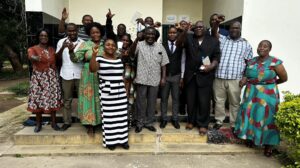
Every Voice Counts: Ensuring Persons with Disabilities Participate Fully in National Elections
An inclusive democracy gives every citizen an opportunity to be heard. For persons with disabilities, meaningful participation in national elections requires accessible information, inclusive electoral processes and respect for individual choice.
National elections shape the decisions that affect our everyday lives—from education and healthcare to employment, infrastructure and public services. Persons with disabilities have a direct stake in these decisions and must have meaningful opportunities to influence them.
For the Zambia Federation of Disability Organisations (ZAFOD), electoral inclusion is part of a wider commitment to dignity, equality and full participation in public life. A strong democracy values persons with disabilities as voters, leaders, advocates and active citizens whose perspectives help shape the country’s future.
Making elections inclusive requires attention to the entire electoral process: how people receive information, register, engage with candidates, cast their ballots and hold elected leaders accountable.
Participation Goes Beyond Casting a Ballot
Voting is an important form of democratic participation, but it is only one part of political life.
Persons with disabilities should also have opportunities to contribute to public debate, participate in political parties, influence manifestos, contest leadership positions and take part in election observation and civic education where applicable requirements are met.
Their participation brings valuable perspectives to national discussions. Experiences of inaccessible transport, communication barriers or exclusion from employment can help identify gaps in policies and public services.
Political inclusion also means recognising that persons with disabilities have interests and expertise across all areas of national development. Their voices matter in discussions about the economy, agriculture, technology, public finance and governance, as well as disability policy.
Understanding the Barriers
Exclusion often results from the way electoral environments, information and processes are designed. Different people encounter different barriers, and an effective response must recognise this diversity.
Physical access
A registration centre or polling station may be difficult to use when it has steps without an accessible alternative, narrow entrances, uneven pathways or insufficient space for mobility aids.
Long queues, limited seating and inaccessible transport can create additional difficulties. Reaching a polling station should not require a person to endure avoidable discomfort, risk or dependence on others.
Accessibility must be considered when venues are selected and prepared.
Access to information
Citizens need clear information about registration, candidates, voting procedures and electoral arrangements to make informed choices.
Information presented only in print may exclude some people with visual impairments. Audio announcements without captions or interpretation may exclude Deaf and hard-of-hearing audiences. Complex language can make important instructions difficult to understand.
Depending on the audience, useful formats can include accessible digital text, large print, audio, Braille, sign language interpretation, captions and easy-to-read materials.
No single format meets everyone’s needs. Offering information in several accessible forms gives more people an opportunity to participate independently.
Attitudes and discrimination
Assumptions about a person’s ability to understand politics or make decisions can be as exclusionary as a physical barrier.
Speaking only to a voter’s companion, dismissing their questions or assuming they cannot make an independent choice undermines dignity.
Respectful engagement begins by addressing the person directly, listening to their preferences and asking before offering assistance.
Privacy and independent choice
Some voters may require support to access information or complete parts of the voting process. That support should respect their choices and protect the privacy of their vote.
Needing assistance does not mean surrendering the right to decide. Support must never become an opportunity to pressure a voter, select a candidate on their behalf or disclose their choice.
Overlapping barriers
Women with disabilities, young people with disabilities and people living in rural communities may face overlapping obstacles to political participation.
For example, inaccessible transport may combine with long distances and limited access to information. Women with disabilities may encounter both gender-based exclusion and disability-related discrimination.
Inclusive planning should respond to these different experiences rather than treating persons with disabilities as a single, uniform group.
What Inclusive Elections Should Look Like
An inclusive electoral process is planned with persons with disabilities from the beginning. Their participation helps identify practical problems and assess whether proposed solutions will work.
Accessible registration and polling venues
Electoral planning should consider the complete journey through a venue: approaching the building, entering it, finding the correct area, accessing information and using the voting space.
Clear signage, suitable pathways, accessible entrances, appropriate voting arrangements and well-organised queues can help reduce barriers.
Consulting persons with different disabilities during accessibility assessments can reveal problems that might otherwise be overlooked.
Clear and accessible voter education
Voter education should reach people early enough to help them prepare.
Information should explain the relevant procedures in clear language and be available through a range of accessible channels. Community outreach, radio, accessible websites, captioned videos and engagement with Organisations of Persons with Disabilities can help extend its reach.
Accessibility should be built into the development of materials, with opportunities for intended users to test whether the information is understandable and usable.
Staff who understand disability inclusion
Electoral staff need practical guidance on respectful communication, accessibility and assistance.
This includes understanding that disabilities are diverse, some are not visible, and people with similar impairments may have different support needs.
Staff should know how to explain procedures clearly, respond to requests respectfully and provide assistance within electoral rules while protecting the voter’s independence.
Accessible ways to raise concerns
People should be able to report inaccessible facilities, discriminatory treatment or other participation barriers through channels they can use.
Clear complaint procedures and timely responses help institutions address problems and learn from voters’ experiences.
Political Parties Must Make Inclusion Part of Their Work
Political parties and candidates have an important role in widening participation.
Accessible campaign venues, inclusive public meetings and campaign information in different formats can help more citizens engage with political choices.
Parties should also create meaningful opportunities for persons with disabilities to contribute to policy development and leadership. Their involvement should influence decisions throughout the political cycle.
Manifestos can support accountability by setting out clear commitments on accessibility, inclusive services and participation. These commitments should be developed through consultation and followed by practical action.
Persons with disabilities are a diverse electorate with different political views and priorities. Their support must never be assumed or treated as something others can direct.
The Role of Families, Communities and the Media
Families and communities can support participation by sharing accessible information, helping address transport barriers and respecting individual political choices.
Where support is requested, it should enable the person to participate on their own terms. Family members, carers and companions should not assume that they are entitled to speak or decide for someone else.
The media also has a responsibility to represent persons with disabilities fairly. Coverage should include their perspectives as voters, candidates, policy experts and community leaders.
Interviews and public debates should explore their ideas and priorities rather than presenting disability mainly as a story of hardship or personal bravery.
ZAFOD’s Contribution to Electoral Inclusion
ZAFOD’s mandate brings together advocacy, capacity building, research and collaboration to advance the rights of persons with disabilities.
The Federation’s work includes advocacy for accessibility and participation in electoral processes. This connects with its broader commitment to strengthening disability organisations and addressing barriers to public life.
Organisations of Persons with Disabilities provide an important link between communities and institutions. They can help identify access challenges, communicate lived experiences and contribute practical recommendations for improvement.
Meaningful consultation requires more than inviting representatives to a meeting. Their contributions should inform planning, implementation and evaluation.
“Nothing about us without us” should be reflected in how electoral decisions are made.
Inclusion Must Continue After Election Day
The responsibility to include persons with disabilities does not end when voting closes.
Elected leaders should maintain accessible channels for public engagement and involve persons with disabilities in consultations about policies, budgets and services.
Lessons from an election should also inform preparations for the next one. Listening to voters’ experiences can help identify which arrangements worked, which barriers remained and what needs to change.
Sustained participation makes it possible for citizens to follow public commitments and hold leaders accountable throughout their term of office.
A Call for Collective Action
An inclusive democracy depends on the actions of electoral institutions, political parties, public bodies, civil society, the media and communities.
Each has a part to play: making venues accessible, communicating clearly, challenging discrimination, respecting independent choice and opening opportunities for leadership.
Persons with disabilities must be able to participate with dignity and confidence. Their voices belong in every stage of national decision-making.
Every voice counts. Every vote matters. An inclusive Zambia begins with equal opportunities to participate.
To learn more about ZAFOD’s work or discuss collaboration on disability inclusion, contact info@zafod.org.zm.